Safety Precautions for DIY Roof Repairs
Every year, roughly 150,000 Americans need medical treatment for roofing-related accidents. While we always recommend leaving major work to professionals, plenty of homeowners want to handle small jobs themselves — swapping a few shingles, resealing a piece of flashing, or clearing debris. If that's you, it pays to understand the basic safety rules before you ever set foot on a ladder.
A roof is one of the most dangerous places to work around your home. The good news is that most accidents are preventable with the right preparation, the right gear, and a healthy respect for heights.
General Safety Tips
Good roof work starts on the ground. Organize your work area, dress for the job, and walk the perimeter to spot hazards before you climb. A few habits go a long way:
- Identify hazardous zones first — overhead power lines, weak spots, and unsafe access points.
- Keep your workspace clean and organized, and well away from children and pets.
- Never work on a wet, icy, or slippery surface.
- Avoid roofing in extreme heat or cold — temperature extremes make shingles brittle or overly soft and easy to damage.
- Wear soft-soled shoes for better traction on the deck.
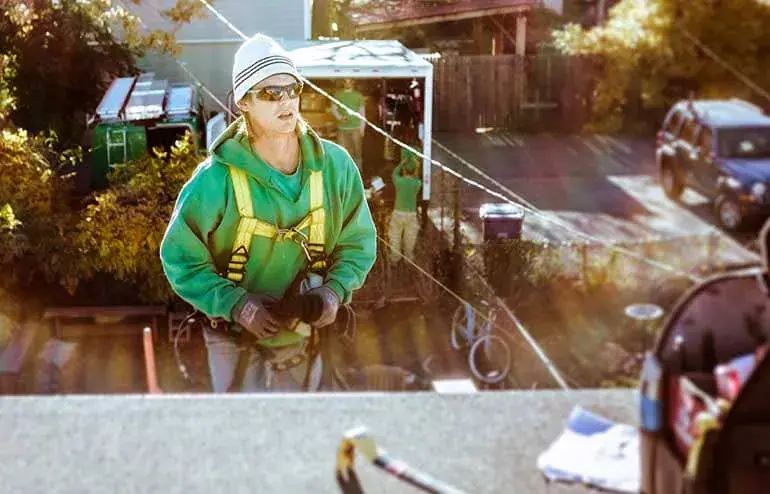
- Use proper safety equipment: a harness and rope, plus toe boards, roof brackets, and anchors secured into the framing.
Ladder Safety
Falls are the leading cause of unintentional injury in the country, and a large share of fatal falls involve a ladder. Since the ladder is how you get on and off the roof, treating it carefully is non-negotiable.
- Set the ladder on firm, level ground.
- Use a ladder that's the right size for the height you're reaching.
- Add roof ladder hooks to keep it secure once it's in place.
- Maintain three points of contact — two hands and a foot, or two feet and a hand — at all times.
Electrical Safety
Power lines and metal don't mix. Electricity can arc several feet, so you don't even have to make direct contact to get hurt.
- Use a wooden or fiberglass ladder instead of a metal one.
- Be extra cautious around metal flashing near service lines.
- Never touch live wires with tools or bare hands.
Nail Gun Safety
A pneumatic nail gun makes quick work of fastening shingles, but it's one of the most common sources of serious injury on a roof. Respect it:
- Never point a nail gun at anyone, even in jest.
- Keep the safety mechanism intact and working.
- Only pull the trigger when the tip is pressed firmly against the material.
- Clean, inspect, and lubricate the tool before each use.
- Don't rest the gun against your body.
- Disconnect the air supply the moment you're finished.
When to Call a Professional
There's no shame in deciding a job is bigger than a weekend project. If you don't have the time, the tools, the experience, or simply the confidence to work safely at height, it's time to bring in a professional roofer who already knows these precautions inside and out. A pro carries the right equipment, the right insurance, and the experience to get up and down safely.
If you find yourself second-guessing whether the roof is safe to walk, that's your answer — step back and let a pro handle it.
At Redeem Roofing & Construction, our crews handle everything from a single roof repair to a full roof replacement across Burlington, Greensboro, and the Piedmont Triad — safely, and with free inspections so you never have to guess. If your roof needs attention, request a free estimate and let our team take it from here.