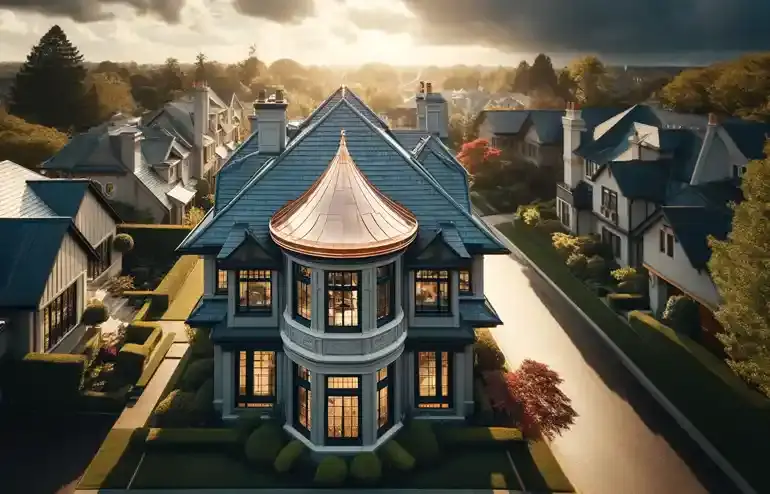
Copper roofing has been protecting buildings around the world for centuries, and it's enjoying a real resurgence as a striking adornment on residential homes here in the Piedmont Triad. With its warm shine that weathers into a distinctive blue-green patina, copper turns a roof into a genuine architectural feature. But like any premium material, it comes with tradeoffs. Before you invest, it helps to understand both the advantages and the disadvantages of a copper roof so you can decide whether it's the right fit for your Burlington or Greensboro home.
The Advantages of Copper Roofing
Corrosion Resistance
Copper holds up remarkably well against the elements. Rather than rusting, it forms a protective surface layer — that famous patina — which actually shields the metal underneath and helps it resist corrosion over decades of exposure to rain, humidity and temperature swings.
Durability
A properly installed copper roof is built to last. Copper stands up to wind, hail and the freeze-thaw cycles we see in North Carolina, and it requires very little maintenance over its lifetime. For homeowners who want a roof they may never have to replace again, copper is one of the longest-lived options available.
Safety
Copper is non-combustible, so it won't ignite or feed a fire. That fire resistance is one reason it has been trusted on important buildings for generations and can make it an attractive choice for homeowners focused on safety.
Energy Efficiency
Copper reflects rather than absorbs a portion of the sun's energy, which can help keep the space beneath the roof cooler. In the warm Triad summers, a reflective metal roof can ease the load on your cooling system compared with darker, heat-absorbing materials.
Environmentally Friendly
Copper is a natural material that is fully recyclable, and copper roofing is often made with recycled content. Its long service life also means fewer tear-offs and less roofing waste headed to the landfill over the life of your home — a meaningful sustainability advantage.
The Disadvantages of Copper Roofing
Noise
Like other metal roofs, copper can be louder than asphalt shingles during heavy rain or hail. The right underlayment, decking and insulation go a long way toward quieting that sound, but it's worth factoring in — especially if you're sensitive to noise.
Cost
Copper is a premium material, and it typically costs more up front than asphalt shingles or standard metal roofing. It also calls for experienced, specialized installation. Many homeowners view that higher initial investment as worthwhile given copper's longevity and curb appeal, but it's an important part of the decision.
Contraction and Expansion
Copper expands and contracts as temperatures rise and fall. If a roof isn't installed with that movement in mind, it can lead to stress on seams and fasteners over time. This is exactly why copper roofing should be installed by an experienced contractor who knows how to detail the system to handle thermal movement.
Is a Copper Roof Right for Your Home?
Copper roofing in the Triad has clear advantages and a few honest disadvantages, and the right choice depends on your budget, your home's style and how long you plan to stay. If you love the look and want a roof that can last for generations, copper is hard to beat. If up-front cost is the priority, a quality asphalt shingle roof or standing-seam metal roof may be a better fit. The best way to weigh the options is to talk it through with a roofer who installs all of them.
"The team at Redeem Roofing are amazing. Our new standing seam metal roof looks awesome" — and the crew finished quickly and cleaned up thoroughly.
At Redeem Roofing & Construction, we install copper and metal roofing throughout Burlington, Greensboro and the surrounding Piedmont Triad, and we're happy to walk your project, explain the tradeoffs and help you choose the system that fits your home and budget. Request your free estimate or call us at (336) 350-1450 and we'll take it from there — no pressure, no obligation.