North Carolina sees its share of hailstorms and severe weather, and across the Piedmont Triad a single storm can leave hidden damage on hundreds of roofs at once. Nationwide, hail caused an estimated $1.1 billion in damage in 2022 alone. For homeowners in Burlington, Greensboro, Winston-Salem and the surrounding towns, knowing how to identify hail damage, choose hail-resistant roofing materials, and navigate an insurance claim can save you thousands of dollars and a lot of stress.
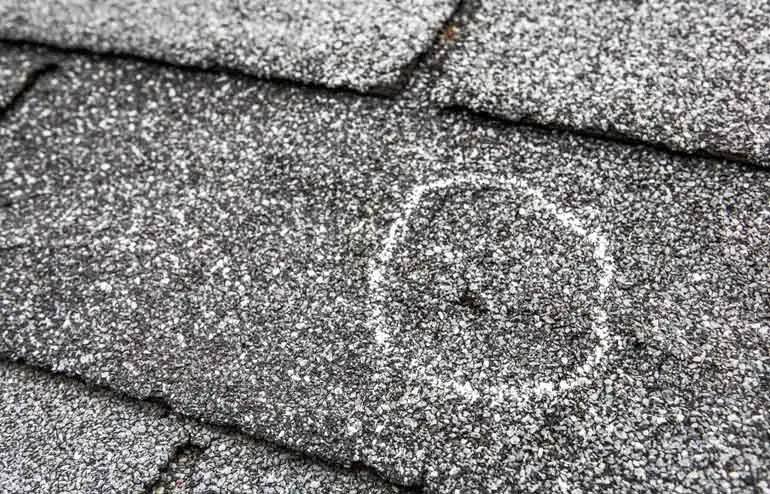
Spotting Hail Damage on Your Roof
Even a minor hail event can cause significant, expensive damage — and the trouble is that a lot of it isn't obvious from the ground. Early detection matters, because small damage can escalate quickly once water finds its way through the roof and into your attic.
Different roofing materials show hail damage differently:
- Asphalt shingles tend to show cracks, dents, and small craters where the granule surface has been knocked loose.
- Metal roofs usually show small, surface-level dents rather than cracks or punctures.
If a storm has rolled through, it's worth having a professional take a closer look before minor damage turns into an attic leak. Our team offers free, no-obligation roof inspections and repairs throughout the Triad.
Class 4 Impact Ratings
For hail-prone regions, look for roofing that carries a UL 2218 Class 4 Impact Rating. This standard comes from Underwriters Laboratories (UL), an independent organization that tests and certifies roofing products against a national impact standard.
Materials are rated Class 1 through Class 4 based on how well they resist hail impact, with Class 4 being the highest level of protection. When you're choosing a new roof in an area that sees regular storms, a Class 4 rating is one of the most important things to ask about.
How Hail Forms — and Why Wind Matters
Hail forms when strong updrafts inside a thunderstorm push raindrops up into the cold upper layers of the atmosphere, where they freeze. The process repeats — drops are lifted, freeze, and grow — until the updrafts can no longer support the weight of the hailstones, which then fall to the ground. That's why hail can range from small pellets to golf-ball-sized or even grapefruit-sized stones.
Because hailstorms usually arrive with high winds, it pays to choose roofing materials that combine a Class 4 impact rating with a strong wind-resistance rating. The two together give your home the best defense against the kind of severe weather that moves through the region.
What About Insurance?
Not every homeowner's policy treats hail damage the same way, so it's smart to confirm exactly what your policy covers before a storm hits. A few things to keep in mind:
- Many policies carry a separate deductible for hail or wind damage, meaning you'll pay part of the repair cost out of pocket.
- Covered damage often has to be deemed "reasonable and necessary" — repairs that don't address an actual safety hazard may not be covered.
Insurance claims can be confusing, and the documentation has to be right. Redeem has years of experience walking Triad homeowners through the claims process — from the inspection and photos to working with your adjuster. If a storm has hit your home, start with a free inspection and estimate and we'll help you understand your options.
Metal Roofing: The Best Choice for Hail
If you want maximum protection, metal roofing is hard to beat. Metal roofs are known for their durability and long life, and they carry the highest Class 4 Impact Rating of any roofing type. Beyond hail, a quality metal roof stands up to a wide range of harsh conditions, including:
- Hurricanes and high winds
- Tornadoes
- Salt air and humidity
- Snow and ice
- Fire
For a lot of Triad homeowners, that combination of strength and longevity makes a standing-seam metal roof well worth considering. If you prefer a more traditional look, modern impact-rated asphalt shingle systems are also a strong, budget-friendly option.
Storm Came Through? Let's Take a Look.
Whether you've spotted dents on your gutters, found granules in the downspouts, or just want peace of mind after a storm, the safest first step is a professional inspection. Redeem Roofing & Construction has served Burlington, Greensboro, Winston-Salem and the Piedmont Triad since 2016, and our inspections and estimates are always free and no-obligation. Get your free roof inspection or call us at (336) 350-1450 — we'll tell you straight whether you have hail damage and walk you through what comes next.